




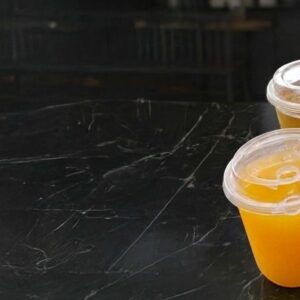
How Reusable Plastic Glasses Increase Profit Margins for Catering Startups
Blogs > How Reusable Plastic Glasses Increase Profit Margins for Catering Startups
1. The Drinkware Decision That Most Catering Startups Get Wrong
Every catering startup makes dozens of procurement decisions in its first year of operation. Ingredients, equipment, staffing, and logistics all receive careful attention. Drinkware rarely does — until a high-value event is served in disposable cups that undercut the quality of everything else on the menu.
The cost of this oversight compounds. Per-event glass rentals carry deposit requirements and return logistics that erode already thin margins. Single-use options eliminate rental complexity but generate recurring expenditure with zero asset value. Neither model supports a business that is trying to build operational leverage.
Reusable plastic drinking glasses purchased in bulk from a certified manufacturer represent a third model — one built on amortised cost, consistent quality, and procurement simplicity. This blog outlines why that model outperforms both alternatives, and how the Damati drinkware range is purpose-built for B2B operators who need to make the numbers work.
2. Why the B2B Case for Reusable Plastic Is Structurally Sound
The hospitality sector is built on margin management. Every cost line that can be converted from recurring to amortised represents a structural improvement to unit economics. Drinkware is one of the few cost lines where that conversion is both straightforward and operationally low-risk.
Hard plastic glasses occupy a performance tier that disposables cannot reach. They hold their form under pressure, resist cracking during tray service and transportation, and maintain their optical clarity across multiple uses. When sourced from a manufacturer using food-grade virgin plastic, they also meet the material safety standards required by institutional procurement officers — a requirement that cheap disposables routinely fail to satisfy.
For operators considering the switch, the decision matrix is simple: glass rental carries liability and logistics overhead; single-use disposables carry no asset value;
high quality plastic glasses bought in bulk carry a one-time acquisition cost that spreads across every subsequent event. The longer the operational runway, the stronger the economics.
3. Material Standards: What Certified Means in a B2B Context
For catering operators seeking to formalise procurement relationships with hotels, corporate canteens, airline caterers, or institutional clients, drinkware certification is not optional. It is a contractual baseline. Understanding what each certification actually confirms — and why it matters in a commercial food service environment — is the first step in building a compliant supply chain.
ISO Certification: Process Consistency You Can Procure Against
Damati holds ISO certification, confirming that its manufacturing processes meet internationally recognised quality management standards. ISO certification provides documented assurance of batch-to-batch consistency, process traceability, and quality system governance. This is the difference between a supplier whose quality is verifiable and one whose quality is claimed.
SGS Certification: Independent Third-Party Verification
SGS is the world’s leading inspection, verification, testing, and certification company. Damati’s SGS certification means that the drinkware range has been independently assessed against global food contact material standards — not self-declared. For operators supplying into hotel chains or export markets, SGS certification satisfies the third-party verification requirement that procurement frameworks increasingly mandate.
Food-Grade Plastic: The Non-Negotiable for Food Service
Food-grade designation confirms that the plastic formulation used in Damati’s glasses has been tested to ensure zero migration of harmful chemical compounds into beverages. Industrial-grade plastic uses additives, stabilisers, and colourants that are not approved for food or liquid contact. The distinction is material — not just regulatory.
For catering operators, this matters in three direct ways. First, institutional contracts with hotels, airlines, and corporate canteens require food-contact certification before drinkware supplier approval. Second, food safety regulators in India and in export markets require that serving ware does not leach harmful substances. Third, in the event of a food safety incident, documented use of food-grade certified drinkware provides legal and commercial protection to the operator.
Virgin Plastic Material: Consistency Without Contamination
Virgin plastic is manufactured directly from raw petrochemical feedstock, without the use of any recycled, reclaimed, or post-industrial plastic content. This is the gold standard for food contact applications because it eliminates contamination risk, ensures uniform mechanical properties across batches, delivers superior optical transparency, and removes residual odour from recycled resin.
For operators sourcing clear plastic drinking glasses where beverage colour and garnish presentation are part of the service proposition, the optical clarity of virgin plastic is not aesthetic preference — it is a functional requirement. A cloudy or hazy cup communicates a different quality signal than a transparent one, regardless of what is inside it.
BPA-Free Construction: The Procurement Standard, Not the Differentiator
BPA free plastic drinking glasses have become the baseline expectation across professional food service, not a premium feature. BPA (Bisphenol A) is a synthetic compound linked to hormonal disruption at sustained exposure levels. Both the 470 CC Cocktail Cup and the 480 CC Mojito Cup from Damati are manufactured without BPA, meeting the procurement standard required by any operator supplying into regulated hospitality environments.
Offering BPA free plastic glasses is not a selling point to lead with — it is a compliance threshold to clear before the conversation about scale, pricing, and operational fit can begin.
4. Product in Focus: The 470 CC Cocktail Cup
The 470 CC Cocktail Cup is Damati’s flagship drinkware for cocktail receptions, gala dinners, branded beverage stations, and high-volume bar service. Its tall, slender profile is engineered for the geometry of layered cocktails and mocktails — drinks where the visual presentation is as commercially important as the flavour.
Clear plastic cocktail glasses in this format allow the layering, colour gradient, and garnish of a well-composed drink to remain fully visible from presentation to consumption. For operators running signature beverage menus, that visual transparency is a direct contributor to perceived menu quality and therefore to price justification.
Key specifications:
• Capacity: 470 CC — sized for generous cocktail servings with garnish and ice
• Base colour options: Transparent or Black
• Material: Food-grade virgin plastic, BPA-free, ISO & SGS certified
• Build: Lightweight, crack-resistant, stackable for storage and logistics efficiency
Hard plastic cocktail glasses in this format are designed to perform in demanding catering environments — tray service, outdoor receptions, large-format events — without the breakage liability of glass or the presentation compromise of standard disposables.
Product URL: https://www.damati.org.in/product/glasses-pizza-stands/470-cc-cocktail-cup-plastic-glass/
5. Product in Focus: The 480 CC Mojito Cup
The 480 CC Mojito Cup addresses a different service format. Wide-mouth drinks — mojitos, iced teas, virgin coolers, layered fruit beverages — require a cup geometry that accommodates ice, garnish, and volume without instability during tray service. The 480 CC Mojito Cup is designed around those structural requirements.
Plastic mojito glasses need a stable base and a wide opening to function correctly in a catering context. A narrow-based cup that tips on a moving tray creates a service risk that no catering operator should accept. The 480 CC format resolves this with a stable base geometry that performs on trays, at outdoor event setups, and in poolside service environments where surface conditions are variable.
Key specifications:
• Capacity: 480 CC — wide-mouth design accommodates ice, fruit, and tall garnish structures
• Base: Stable geometry — engineered for tray service stability
• Base colour options: Transparent or Black
• Material: Food-grade virgin plastic, BPA-free, ISO & SGS certified
• Build: Crack-resistant, stackable, designed for repeated commercial handling
Mocktail plastic glasses for branded hospitality bars and beverage stations require the same quality standards as their alcoholic counterparts. Corporate clients, hotel partners, and institutional buyers do not distinguish between the two in procurement conversations — the expectation is identical. The 480 CC Mojito Cup meets that expectation through certified material standards and purpose-designed geometry.
Operators who need to buy plastic glasses for wide-format beverage service — events where mojitos, iced teas, and garnish-forward drinks are a menu staple — will find the 480 CC carton format aligned with their operational reorder cadence.
Product URL: https://www.damati.org.in/product/glasses-pizza-stands/480-cc-mojito-cup-plastic-glass/
6. The Long-Term Economics of Switching to Reusable
The unit economics argument for reusable plastic cocktail glasses and reusable plastic drinking glasses rests on a simple principle: the more times a cup is used, the lower its cost per service occasion. Glass rental and single-use disposables do not share this property. Their cost per use is fixed, which means their cost compounds with volume rather than declining.
For a catering startup in growth mode, the margin implications of that difference become significant as event frequency increases. The initial bulk investment in certified drinkware transitions from a line item to a strategic asset — one that improves margin per event without any change to the menu, the team, or the client proposition.
The compounding advantage extends beyond direct cost. Operators who standardise on good quality plastic drinking glasses from a consistent manufacturer eliminate the batch variation that creates service inconsistencies. Every event uses cups with the same dimensions, clarity, and structural integrity. For operators building a brand reputation, that consistency is a commercial asset.
7. Presentation as a Commercial Variable
In the catering industry, the vessel in which a drink is served contributes directly to the guest’s perception of value. A premium mocktail served in a structurally compromised or visually inferior cup signals a quality ceiling that the drink itself cannot overcome. Conversely, the same drink served in a hard plastic drinking glass with optical clarity and structural integrity communicates a different value to the guest — one that supports the pricing the operator needs to maintain margins.
Damati’s virgin plastic formulation delivers the optical transparency that positions plastic glasses for drinks as credible premium service vessels, not as compromises. For operators running branded beverage stations, themed events, or corporate hospitality setups, the visual quality of the drinkware is a brand asset — one that costs nothing extra per event when the cups are sourced and managed correctly.
The same logic applies to plastic glasses for party formats, outdoor events, and high-volume reception service. When the drinkware looks and feels premium, it raises the perceived quality of everything served in it. That perception lift costs nothing incremental — it is delivered by the procurement decision made upstream.
8. Scaling Inventory Without Scaling Complexity
One of the operational challenges that catches growing catering businesses off-guard is inventory management during a rapid growth phase. Winning a larger contract with less than a week’s notice requires a drinkware supply chain that can respond at that speed. Retail sourcing cannot. Direct manufacturer relationships can.
Additional operational advantages for B2B operators:
• Stackable design: Reduces storage footprint significantly, critical for operators without large warehousing facilities.
• Consistent moulding quality: No batch-to-batch variation means uniform presentation across every event, without QC checks on each incoming order.
• Pan-India delivery: Damati supplies across India from Mumbai, with international operations in Dubai — a supply chain that scales with the operator’s geographic expansion.
• Direct manufacturer relationship: Eliminates the pricing volatility and availability constraints of retail and distributor channels — the correct procurement model for any business operating at commercial event frequency.
For operators evaluating whether to buy plastic glasses directly from a manufacturer rather than through intermediaries, the question is not whether the savings are real — they are. The question is whether the operator’s current event volume justifies the carton quantities involved. For any business running multiple events per month, the answer is yes.
9. Meeting Institutional Procurement Requirements
As catering startups formalise procurement relationships with hotels, airlines, corporate canteens, and institutional clients, drinkware documentation enters the conversation. Procurement officers at these organisations are not evaluating drinkware aesthetically — they are evaluating it against a compliance checklist.
The Damati range meets those requirements across the board:
• ISO certification: Confirms quality management system compliance and batch traceability — required for inclusion on approved supplier lists.
• SGS certification: Provides independent third-party verification of safety and quality — satisfies the external audit requirement in institutional procurement frameworks.
• Food-grade plastic: Confirms no chemical migration into beverages — mandatory for any operator supplying hotel dining, airline catering, or healthcare hospitality.
• Virgin plastic material: Confirms no recycled content — eliminates contamination risk and satisfies operators whose clients require premium material standards.
• BPA-free construction: Confirms absence of Bisphenol A — the baseline expectation in any regulated food service environment.
Operators who cannot demonstrate drinkware compliance through certified supplier documentation are effectively excluded from institutional contract opportunities. Sourcing from Damati removes that barrier.
10. The Bottom Line for Catering Startups
Drinkware is a fixed operational cost that most early-stage caterers manage as if it were variable. The switch to certified, bulk-purchased reusable drinkware is one of the highest-leverage procurement decisions available to a catering startup in its growth phase — not because it is dramatic, but because it is durable. The economics improve with every event.
The Damati range — specifically the 470 CC Cocktail Cup and the 480 CC Mojito Cup — provides operators with a drinkware solution that is certified, consistent, visually premium, operationally practical, and structurally suited to both institutional and event catering environments.
Best plastic drinking glasses for commercial catering are not defined by price alone. They are defined by certification compliance, material integrity, presentation quality, and procurement scalability. On all four dimensions, the Damati range is designed for operators who are serious about building a sustainable catering business.
Shop the Range
470 CC Cocktail Cup Plastic Glass: https://www.damati.org.in/product/glasses-pizza-stands/470-cc-cocktail-cup-plastic-glass/
480 CC Mojito Cup Plastic Glass: https://www.damati.org.in/product/glasses-pizza-stands/480-cc-mojito-cup-plastic-glass/
Contact Damati
• Email: info@damati.com
• Website: www.damati.org.in
