



Deli Containers: Why Is Transparency and Lid Security Important in Deli Packaging?
Blogs > Deli Containers: Why Is Transparency and Lid Security Important in Deli Packaging?
Introduction
Walk into any modern deli, supermarket, catering kitchen, or cloud kitchen and you will notice one thing almost immediately — the food is packed in sleek, sturdy, see-through containers. These are deli containers, and they have quietly become one of the most critical tools in food service and retail packaging.
Yet most consumers and even many food business operators overlook two defining features that determine whether a deli container actually does its job: visual transparency and lid security. Why do these two qualities matter so much? What happens when they are absent? And how do you choose deli containers and lids that get both right?
This in-depth guide answers all of those questions. Whether you run a QSR chain, operate a catering service, manage a retail deli counter, or are simply looking for the best reusable deli containers for your home kitchen, read on — this is everything you need to know.
What Exactly Are Deli Containers?
Deli containers are food-grade packaging containers — typically round or rectangular — designed to hold prepared foods, salads, soups, marinated proteins, sauces, pickled vegetables, cold cuts, and much more. They are a staple in commercial kitchens, deli counters, catering operations, and increasingly in household meal prep routines.
A standard deli plastic container is made from polypropylene (PP) — a food-safe thermoplastic known for its clarity, structural rigidity, resistance to staining, and ability to withstand both freezer temperatures and microwave reheating. Each container pairs with a matching lid that snaps firmly into place, creating a reliable seal.
Why Transparency in Deli Packaging Is a Non-Negotiable Feature
Transparency in food packaging is not merely an aesthetic preference — it is a functional and commercial necessity. Here is why clarity matters enormously when selecting deli containers.
1. Consumers buy with their eyes first
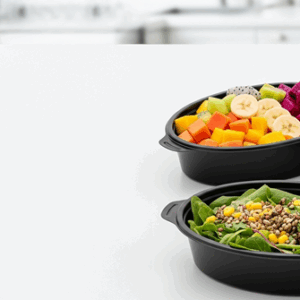
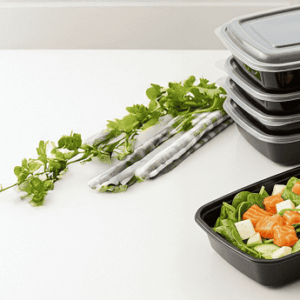
Research across retail food markets consistently shows that visual product inspection is the primary driver of purchase decisions at deli counters and in self-serve chilled sections. When a customer can see the vibrant colours of a pasta salad, the glistening surface of marinated chicken, or the fresh crunch of coleslaw through a clear deli plastic container, they are far more likely to pick it up and place it in their basket.
Opaque or even semi-translucent containers create doubt. Is the food still fresh? What does it actually look like? These unanswered questions push customers toward alternatives. In competitive retail environments, a fully transparent container is a silent salesperson that works around the clock.
2. Transparency reduces food waste in commercial kitchens
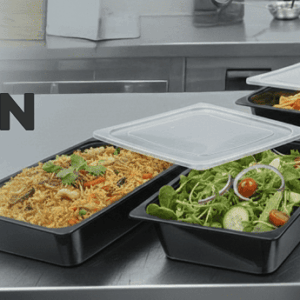
In fast-paced commercial kitchens, speed is everything. Kitchen staff are constantly reaching for the right container among dozens of stored items. When deli containers are made from high-clarity PP, contents are immediately visible without the need to open lids, read labels, or disrupt storage organisation. This saves time, reduces cross-contamination risk, and significantly cuts down on accidental spoilage from repeatedly opened containers.
Many high-quality deli containers — including round deli containers offered by leading manufacturers like Damati — are designed to maintain their optical clarity even after multiple cycles through commercial dishwashers, making them ideal reusable deli containers for prep kitchens and institutional food service.
3. Clear containers support food safety compliance
Food safety inspectors and HACCP protocols often require that stored foods be identifiable at a glance. Transparent deli containers make it easy to verify the contents, check for signs of spoilage or contamination, and ensure proper FIFO (first in, first out) inventory rotation. In environments where every second counts and every oversight can carry regulatory consequences, the value of visual clarity simply cannot be overstated.
4. Premium Presentation for Takeaway and Delivery Packaging
The rapid growth of food delivery platforms and takeaway culture has placed new demands on deli packaging. When a customer opens their delivery bag and sees food packed in clean, crystal-clear deli containers and lids, it signals quality, hygiene, and professionalism. In contrast, dull or yellowed containers immediately diminish perceived value, regardless of how good the food inside actually is.
Why Lid Security Is Just as Critical as Container Clarity
Transparency gets a container noticed. Lid security keeps it trustworthy. A poorly fitting lid can undo all the benefits of the finest deli plastic container in seconds.
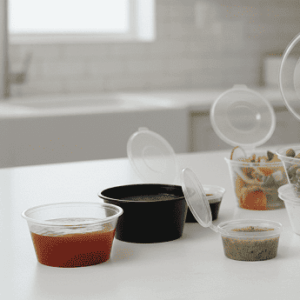
A secure lid does far more than simply cover a container. In delivery and transit, precision-engineered snap closures on quality deli containers and lids prevent leaks that would otherwise damage your brand, generate refund requests, and drive customers away. In storage, a tight seal slows oxidation and inhibits microbial growth, extending freshness and reducing spoilage losses — a critical advantage for operations that prep food in bulk. Structurally sound lids also allow round deli containers to stack safely in refrigerators and walk-in coolers without buckling or collapsing, maximising cold storage capacity with minimal reorganisation effort. And at the retail counter, a firmly snapped lid that shows visible distortion if tampered with gives consumers an important assurance that what they are buying is untouched — a quiet but powerful trust signal in a market where food safety awareness is rising steadily.
BPA-Free Deli Containers: Why Material Safety Cannot Be Overlooked
BPA-free deli containers — manufactured using polypropylene (PP) without BPA additives — have become the standard expectation in professional food service and retail. PP is inherently free from BPA in its base formulation, which is one of the primary reasons it has displaced older plastics in food-contact-applications.
Key benefits of BPA-free deli containers include:
• No chemical leaching into food even during microwave reheating or freezer storage
• Suitability for all food types including acidic foods, oils, and proteins
• Peace of mind for health-conscious consumers who scrutinise packaging material
• Better alignment with sustainability and corporate responsibility commitments
When evaluating any deli container supplier, verifying that their products carry explicit
BPA-free certification — not just a generic food-safe claim — is an essential part of due diligence.
Frequently Asked Questions About Deli Containers
Are deli containers microwave-safe?
High-quality PP deli plastic containers are generally microwave-safe. However, always check the manufacturer’s specifications and look for the microwave-safe symbol on the container base. Lids may need to be vented or removed during microwave use to prevent pressure build-up.
Can deli containers go in the freezer?
Yes. Most BPA-free deli containers made from PP are rated for freezer storage, typically down to -20°C or lower. This makes them ideal for batch cooking, frozen meal preparation, and long-term food preservation. Always leave adequate headspace when freezing liquids to account for expansion.
How many times can reusable deli containers be washed?
Premium reusable deli containers made from high-grade PP can typically withstand 50 to 100+ commercial dishwasher cycles before showing meaningful performance degradation. The key indicator to watch is optical clarity — once a container becomes significantly hazy, its useful life for retail display has ended, though it may still be suitable for back-of-house storage.
What sizes of deli containers are most commonly used?
The most frequently used sizes in food service are 12 oz, 16 oz, 24 oz, 32 oz and 8 oz round deli containers. Smaller sizes (8 oz) work well for sauces, dips, and condiments, while larger sizes are preferred for bulk salad preparations and family-portion servings. The 16 oz and 32 oz sizes tend to be the highest volume movers across most deli and catering applications.
Are deli containers recyclable?
PP deli containers (marked with the recycling symbol number 5) are recyclable in most markets that accept PP in their curbside or drop-off collection programmes. However, recyclability depends on local collection infrastructure. For businesses with sustainability commitments, investing in reusable deli containers is the more impactful option as it reduces waste generation at the source rather than managing it at end-of-life.
Why Damati Deli Containers Stand Apart in the Market
Damati has built its reputation in the food packaging segment by addressing the exact challenges discussed throughout this guide — delivering deli containers that combine exceptional optical clarity, precision-engineered lid security, certified BPA- free material formulations, and durability suited for both single-use and multiple reuse cycles.
The Damati deli container range — available in 12 oz, 16 oz, 24 oz, 32 oz, and 8 oz — is manufactured from food-grade polypropylene to exacting quality standards. Every container is designed to pair seamlessly with its corresponding lid, ensuring a snug, leak-resistant closure that holds firm through refrigeration, transit, and stacking.
For businesses looking for a reliable, high-performance deli container solution backed by manufacturing expertise and a commitment to food safety, Damati represents a trusted partner with the product range and quality credentials to match.
Explore the full Damati deli container range at: www.damati.org.in/product-category/deli-container/
Conclusion
Transparency and lid security are not luxury features in deli packaging — they are fundamental performance requirements. Visual clarity drives purchase decisions, supports kitchen efficiency, and projects quality to every customer who sees your product. Lid security protects food integrity, prevents costly leaks and spoilage, and enables the safe, efficient storage and transport that modern food service demands.
Whether you are selecting deli containers and lids for a busy commercial kitchen, a retail deli counter, a meal delivery operation, or a catering business, prioritising these two attributes — along with BPA-free material certification, the practical advantages of the round deli container format, and the long-term economics of reusable deli containers — will consistently deliver better food safety outcomes, stronger customer satisfaction, and healthier bottom-line results.
