


Packaging for Cloud Kitchens & Delivery-First Brands: What to Look for in 2026
Blogs > Packaging for Cloud Kitchens & Delivery-First Brands: What to Look for in 2026
For cloud kitchens and delivery-first food brands, packaging is no longer just a way to carry food from the kitchen to the customer. It plays an important role in food safety, delivery performance, presentation, convenience, and overall customer experience.
Unlike traditional restaurants, cloud kitchens do not have a dining space where customers experience the brand directly. For delivery orders, the packaging becomes one of the most visible physical touchpoints between the business and the customer.
As food delivery continues to grow in 2026, businesses need packaging that can handle the practical demands of modern food service. The right container should protect food during transportation, provide a secure closure, support efficient kitchen operations, and suit the type of food being delivered.
Whether you operate a cloud kitchen, QSR, restaurant, catering business, meal-prep brand, or delivery-only food business, here is what to consider when selecting food packaging for cloud kitchens.
Why Packaging Matters for Cloud Kitchens
A typical delivery order can pass through several stages before reaching the customer. Food is prepared, portioned, packed, stored temporarily, collected by a delivery executive, transported, and finally opened by the customer.
Packaging needs to perform throughout this process.
Poor packaging can result in leakage, damaged food presentation, difficulty in handling, or unnecessary food waste. On the other hand, well-selected packaging can make the packing process more efficient and provide a better customer experience.
For cloud kitchens, effective packaging can help with:
• Preventing leaks and spills
• Maintaining food presentation
• Managing consistent portion sizes
• Improving packing efficiency
• Supporting convenient reheating
• Optimizing storage and stacking
• Creating a consistent delivery experience
This is why choosing food containers for cloud kitchens should involve more than comparing prices. Businesses should evaluate material, size, lid design, food compatibility, durability, and operational requirements.
1. Start With the Right Food-Grade Material
Material should be one of the first considerations when selecting food packaging.
When purchasing plastic containers for food packaging, businesses should confirm that the containers are made from suitable food-grade material and are intended for the type of food application required.
Polypropylene, commonly known as PP, is widely used in food packaging because of its practical combination of durability, versatility, and heat-handling properties.
However, not every plastic container has the same specifications. Businesses should always check the manufacturer’s product information and intended-use guidelines before selecting packaging for hot foods, cold foods, freezing, or reheating.
For professional food businesses, working with an experienced manufacturer can also make it easier to maintain consistent product quality and specifications across bulk orders.
2. Consider PP Plastic Food Containers
PP plastic food containers are a practical option for many takeaway and delivery applications.
Depending on the specific container design and manufacturer specifications, PP containers can be used for a variety of food products, including:
• Curries and gravies
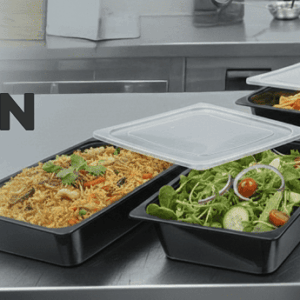
• Rice and biryani
• Pasta and noodles
• Dal and vegetables
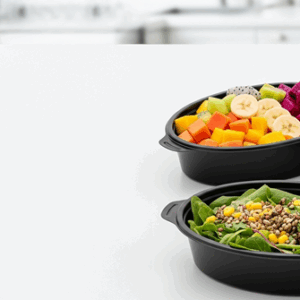
• Salads
• Desserts
• Meal-prep portions
• Combo meals
For a cloud kitchen with a diverse menu, using multiple container sizes and formats can make packaging more efficient.
Instead of trying to fit every menu item into the same container, businesses can create a packaging system based on food type, serving size, and delivery requirements.
3. Choose Food Containers With Secure Lids
A container’s performance depends heavily on its closure.
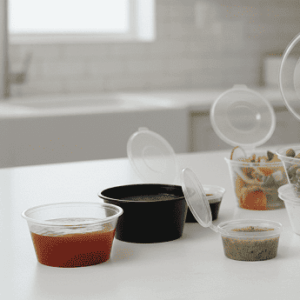
Food containers with lids should provide a secure fit that helps keep the contents protected during handling and transportation. This is particularly important for liquid and semi-liquid foods such as curries, gravies, sauces, and soups.
During delivery, containers may be moved, stacked, tilted, or exposed to vibrations. A secure lid can help reduce the risk of accidental opening and leakage.
Businesses should test both the container and lid together rather than evaluating them separately.
When selecting packaging, consider:
• How securely the lid fits
• Whether it is easy for staff to close
• Whether it remains secure during transportation
• Whether it works effectively with the selected container size
• Whether it is suitable for liquid or semi-liquid foods
A reliable closure can make a significant difference to the customer’s experience.
4. Look for Microwave-Safe Options When Required
Convenience is an increasingly important part of food delivery.
Customers may not always consume their food immediately. Some may refrigerate meals and reheat them later, particularly when ordering meal-prep products, larger portions, or ready-to-eat meals.
For such applications, microwave safe food containers can provide an additional level of convenience.
However, microwave suitability should always be confirmed for the specific container. Businesses should not assume that every plastic container is automatically suitable for microwave use.
If reheating is an important part of your product experience, verify the manufacturer’s specifications and follow the recommended usage instructions.
For suitable PP containers, microwave compatibility can allow customers to reheat food without transferring it to another dish.
5. Select the Right Container Size
Container capacity can directly affect food presentation and packaging efficiency.
A container that is too small may result in overfilling, while a container that is significantly larger than the serving size can leave excessive empty space.
The right capacity should be based on:
• Portion size
• Food type
• Food density
• Gravy or sauce content
• Presentation requirements
• Delivery conditions
For example, a container used for a single portion of curry may have different requirements from one used for a family-sized biryani.
Cloud kitchens can benefit from creating a simple packaging chart that assigns a specific container size to each menu item. This allows staff to pack orders consistently, especially during busy periods.
6. Think About Leak Resistance
Leakage is one of the most common packaging problems faced by delivery businesses.
A leaking container can affect the food itself, stain delivery bags, damage other items in the order, and create a negative customer experience.
This makes leak resistance an important factor when selecting food containers for cloud kitchens.
Before placing a large bulk order, businesses should test packaging with actual menu items. Testing should include foods such as:
• Curries
• Gravies
• Soups
• Sauces
• Oil-rich foods
• Moist rice dishes
Testing packaging under realistic conditions gives businesses a better understanding of how containers perform during actual delivery.
7. Consider Shape, Stackability, and Storage
The shape of a container affects more than appearance. It can influence kitchen storage, packing speed, delivery-bag organization, and available space.
Round containers can work well for soups, curries, and certain portion sizes, while rectangular formats can make efficient use of storage and delivery space.
Stackability is particularly important for high-volume kitchens. Containers that can be stored neatly can help reduce clutter and make packaging inventory easier to manage.
When evaluating a container, consider how many units can be stored in your available space and whether different sizes can be organized efficiently.
8. Make Packaging Part of the Customer Experience
For delivery-first businesses, packaging is part of the product presentation.
When a customer opens an order, the container is one of the first physical elements they see. A clean, appropriately sized, well-structured container can help the food look more organized and appealing.
This is particularly important for:
• Premium meals
• Salads
• Desserts
• Meal-prep products
• Specialty dishes
• Branded food products
The packaging should support the food rather than distract from it.
9. Packaging Should Improve Kitchen Efficiency
Cloud kitchens often operate under tight time constraints, particularly during lunch, dinner, weekends, and promotional periods.
Packaging that is difficult to stack, identify, close, or store can slow down order fulfillment.
When evaluating packaging, ask:
• Can staff identify the correct size quickly?
• Are the lids easy to fit?
• Can containers be stacked efficiently?
• Does the packaging fit existing storage areas?
• Can staff pack large order volumes without unnecessary steps?
A well-planned packaging system can make the packing station more organized and help maintain consistency during peak periods.
10. Don’t Choose Packaging Based Only on Unit Price
Cost is naturally important for food businesses, but the lowest price per container does not necessarily provide the best overall value.
Packaging problems can create additional costs through:
• Food wastage
• Refunds and replacements
• Customer complaints
• Damaged delivery bags
• Additional packing time
• Inconsistent presentation
For high-volume businesses, even a small packaging issue can become significant when repeated across hundreds or thousands of orders.
Instead of looking only at unit price, consider the overall combination of quality, performance, consistency, supply reliability, and operational efficiency.
11. Choose a Reliable Packaging Manufacturer
As a cloud kitchen grows, packaging supply becomes increasingly important.
A shortage of a frequently used container can disrupt daily operations and affect order fulfillment. Businesses should therefore consider the supplier’s ability to support both current and future requirements.
When evaluating a food packaging manufacturer in India, consider:
• Manufacturing capabilities
• Product range
• Material specifications
• Quality consistency
• Bulk-order capacity
• Lead times
• Customization options
• Product documentation
• Customer support
A reliable manufacturing partner can make packaging procurement more predictable as order volumes increase.
12. Build a Packaging System Around Your Menu
Instead of using one container for every food item, create a packaging system based on your menu.
For example:
| Food Type | Key Packaging Considerations |
| Curries & Gravies |
Secure lid, suitable capacity, leak resistance |
| Rice & Biryani |
Appropriate depth, strength, stackability |
| Pasta & Noodles |
Sufficient capacity, easy access |
| Salads | Suitable size, presentation, secure closure |
| Desserts | Appropriate portion size and presentation |
| Combo Meals |
Multiple sizes or compartment options |
| Meal Prep | Consistent portions and reheating suitability |
This approach can simplify purchasing, storage, and staff training while creating a more consistent packaging experience.
2026 Checklist for Choosing Cloud Kitchen Packaging
Before selecting your packaging supplier, review the following:
Material
• Is the material food-grade?
• Is it suitable for the food being packed?
Performance
• Is the container suitable for hot or cold foods?
• Does the lid close securely?
• Is it suitable for the delivery conditions?
• Does it provide the required leak resistance?
Convenience
• Is it microwave-safe if reheating is required?
• Is it easy to stack and store?
• Can staff pack orders quickly?
Business Requirements
• Can the supplier handle bulk orders?
• Are multiple sizes and formats available?
• Can supply remain consistent as the business grows?
Quality
• Are product specifications available?
• Can samples be tested before bulk purchasing?
Frequently Asked Questions
1. What type of packaging is best for cloud kitchens?
The best packaging depends on the menu and delivery requirements. Food-grade PP containers with secure lids are a practical option for many hot and cold food applications, provided the specific product meets the required specifications.
2. Are PP plastic food containers suitable for food delivery?
Yes, PP plastic food containers can be suitable for many food delivery applications. Their suitability depends on the specific product design, food type, temperature, and manufacturer’s stated specifications.
3. What should I look for in food containers with lids?
Look for containers with a secure-fitting lid, appropriate capacity, suitable food-contact material, and performance characteristics that match your menu. For delivery businesses, leak resistance is particularly important.
4. Are microwave-safe food containers useful for cloud kitchens?
Yes. Microwave-safe food containers can offer added convenience when customers may need to reheat their meals. Always confirm that the specific container is rated for microwave use and follow the manufacturer’s instructions.
5. How do I choose the right food packaging for my cloud kitchen?
Start by evaluating your menu, portion sizes, food temperatures, delivery distances, storage space, and reheating requirements. Then test suitable containers with actual food before placing a large order.
Conclusion
In 2026, packaging should be treated as an important part of a cloud kitchen’s operational strategy rather than simply another consumable.
The right food packaging for cloud kitchens can help protect food, reduce leakage, improve packing efficiency, support convenient reheating, and create a more consistent customer experience.
Whether you are launching a new delivery-first brand or scaling an established cloud kitchen, focus on food-grade materials, secure lids, suitable sizes, reliable performance, stackability, and consistent supply.
Damati offers a range of PP plastic food containers and food packaging solutions designed for restaurants, cloud kitchens, catering businesses, food delivery brands, and other food-service businesses.
Explore Damati’s food packaging range to find practical container solutions for your growing food business.
